Our Story

Why We Started This

My name is Liza Naumann, and for over 30 years I’ve worked as a speech-language pathologist helping stroke patients and their families navigate some of the most challenging moments of their lives.

Throughout my career I’ve worked in home health, assisted living, and skilled nursing settings and I’ve seen the same pattern again and again. Families are doing their best to support a loved one after a stroke, but often feel overwhelmed, unsure what questions to ask, and uncertain about what to do next, especially after a hospital discharge or rehabilitation.

While clinical care focuses on treatment, there is often a gap when it comes to helping families truly understand stroke recovery, manage swallowing safety, and make informed decisions at home.

That gap is what led me to create Family First Stroke Care Planning.
Experience Supporting Stroke Patients and Families

I earned my Master’s Degree in Speech-Language Pathology from the University of Rhode Island and have been a licensed speech-language pathologist and certified member of the American Speech-Language-Hearing Association (ASHA) since 1994.

For more than three decades, I’ve worked with stroke patients across a wide range of care settings, including home health care, assisted living communities, and skilled nursing facilities.

My clinical focus has included:

  • Stroke recovery support.
  • Swallowing disorders (dysphagia).
  • Cognitive-communication challenges (aphasia).

Much of my work has been in homecare, where I’ve seen firsthand that people often do best when they are supported by loved ones at home.

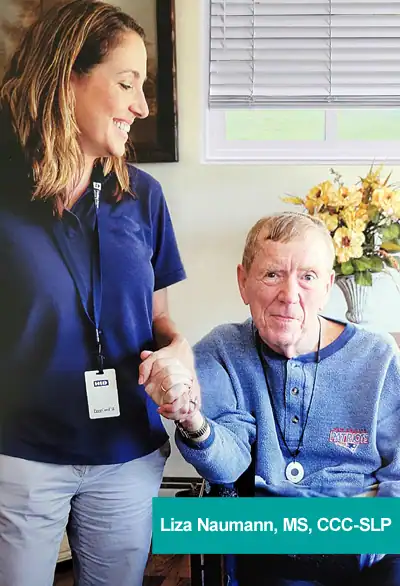
Liza Naumann supporting an older adult during stroke recovery care

Filling the Gap After Discharge

One of the most difficult times for families is the transition from hospital or rehab to home.

Common concerns I’ve seen include:

  • “What should we be doing at home after a stroke?”
  • “Is this normal during stroke recovery?”
  • “How do we prevent choking or swallowing problems?”
  • “What questions should we be asking our care team?”

These are important questions, but many families are left trying to figure out the answers on their own.

Family First Stroke Care Planning was created to provide stroke recovery guidance, care planning support, and swallowing safety education during this critical time.

A Different Kind of Support

Family First Stroke Care Planning does not provide medical treatment or therapy.

Instead, we help families:

  • Understand stroke recovery and what to expect.
  • Navigate care decisions after discharge.
  • Recognize risks related to swallowing and safety.
  • Prepare for medical appointments and ask the right questions.
  • Create a clear, practical plan for care at home.

A Personal Approach to Stroke Care Planning

This work is deeply personal to me. Over the years, I’ve seen how much families carry during stroke recovery and how valuable it is to have someone who can provide clarity, reassurance, and direction.

If you’re feeling unsure about what to do next after a stroke, we’re here to help you understand your options and move forward with confidence.

Take the first step toward clarity and a plan.