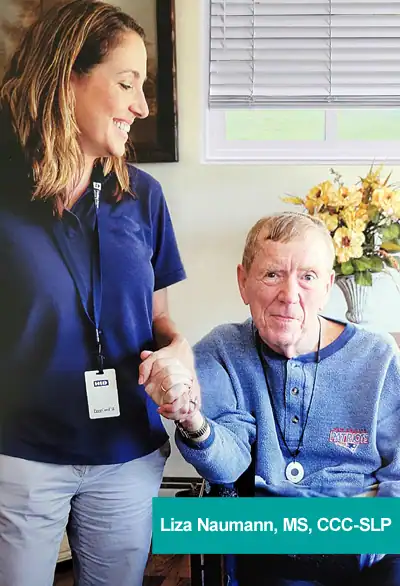

With more than 30 years of experience supporting stroke patients and families across home health, rehabilitation, assisted living, and skilled nursing settings, Liza provides educational guidance focused on recovery, swallowing safety, care transitions, and family support after a stroke.
1.4K
A stroke can change life in an instant, not only for the individual affected, but for friends and family surrounding them. In the days and weeks that follow, many families find themselves overwhelmed with questions, emotions, appointments, and uncertainty about what comes next.
One of the most important things to understand early on is that no two strokes, and no two recovery journeys, are exactly alike.
The effects of a stroke can vary widely depending on the area of the brain affected, the severity of the stroke, the person’s overall health prior to the event, and the support systems available during recovery.
While some individuals may recover quickly in certain areas, others may face longer-term physical, cognitive, communication, or swallowing challenges.
For families, this uncertainty can feel incredibly difficult to navigate.
Recovery Often Happens in Stages
In the early stages after a stroke, the focus is often on stabilization and immediate medical care. This may be followed by rehabilitation services such as physical therapy, occupational therapy, and speech-language therapy, depending on the individual’s needs.
As recovery progresses, families often transition into a new phase, one that involves learning how to navigate daily life after discharge from the hospital or rehabilitation setting.
This is where many families begin asking questions such as:
- What improvements are realistic to expect?
- How much support will be needed at home?
- Will swallowing or communication improve?
- How do we keep our loved one safe?
- What questions should we be asking the care team?
- How do we prepare emotionally and practically for what’s ahead?
These are very normal questions, and many families feel unprepared for just how much information and decision-making can suddenly fall on their shoulders.
Recovery Can Mean Different Things to Different People
One of the most important concepts families should understand is that “recovery” does not always mean the same thing for everyone.
For some individuals, recovery may mean returning to previous levels of independence, communication, or mobility. For others, recovery may involve adapting to new limitations, improving safety and quality of life, or making gradual meaningful progress over time.
In many cases, recovery is not a straight line. Progress may occur slowly, unevenly, or in ways that are not always immediately obvious. There can be moments of encouragement alongside moments of frustration and fatigue, both for the stroke survivor and for those caring for them.
Patience, realistic expectations, and strong support systems can make an enormous difference throughout this process.
Common Challenges Families May Encounter
Every situation is unique, but some common areas families may encounter after a stroke include:
Communication Changes
Some individuals may experience difficulty speaking, understanding language, finding words, or processing information.
Swallowing Difficulties
Swallowing problems can occur after a stroke and may affect eating, drinking, medication management, and overall safety during meals.
Cognitive Changes
Memory, attention, problem-solving, and decision-making abilities may be affected to varying degrees.
Fatigue
Stroke recovery can be physically and mentally exhausting. Fatigue is extremely common and is often underestimated by others.
Emotional Adjustment
It is common for both stroke survivors and caregivers to experience anxiety, grief, frustration, sadness, or emotional overwhelm during recovery.
Questions Families Should Consider Asking
As recovery progresses, families often benefit from asking questions such as:
- What are the most important safety concerns right now?
- What level of supervision may be needed at home?
- Are there swallowing precautions or dietary recommendations?
- What signs or changes should we monitor closely?
- What therapies or services may still be beneficial?
- How can we best support communication and independence?
- What realistic goals should we focus on right now?
Families should never feel afraid to ask questions or request clarification from their healthcare providers. Understanding the “why” behind recommendations can help families feel more confident and better prepared moving forward.
Final Thoughts
The period following a stroke can feel uncertain, emotional, and overwhelming for many families. It is important to remember that recovery is highly individual, and meaningful progress can continue long after the initial event.
Above all, families deserve clear information, compassionate support, and realistic guidance as they navigate the recovery process together.
While every journey is different, no family should feel like they have to navigate it alone.